UVM Sequence Tree
Place the cursor on the declaration of a sequence or on an element in the context of it and use the DVT: Show UVM Sequence Tree command.
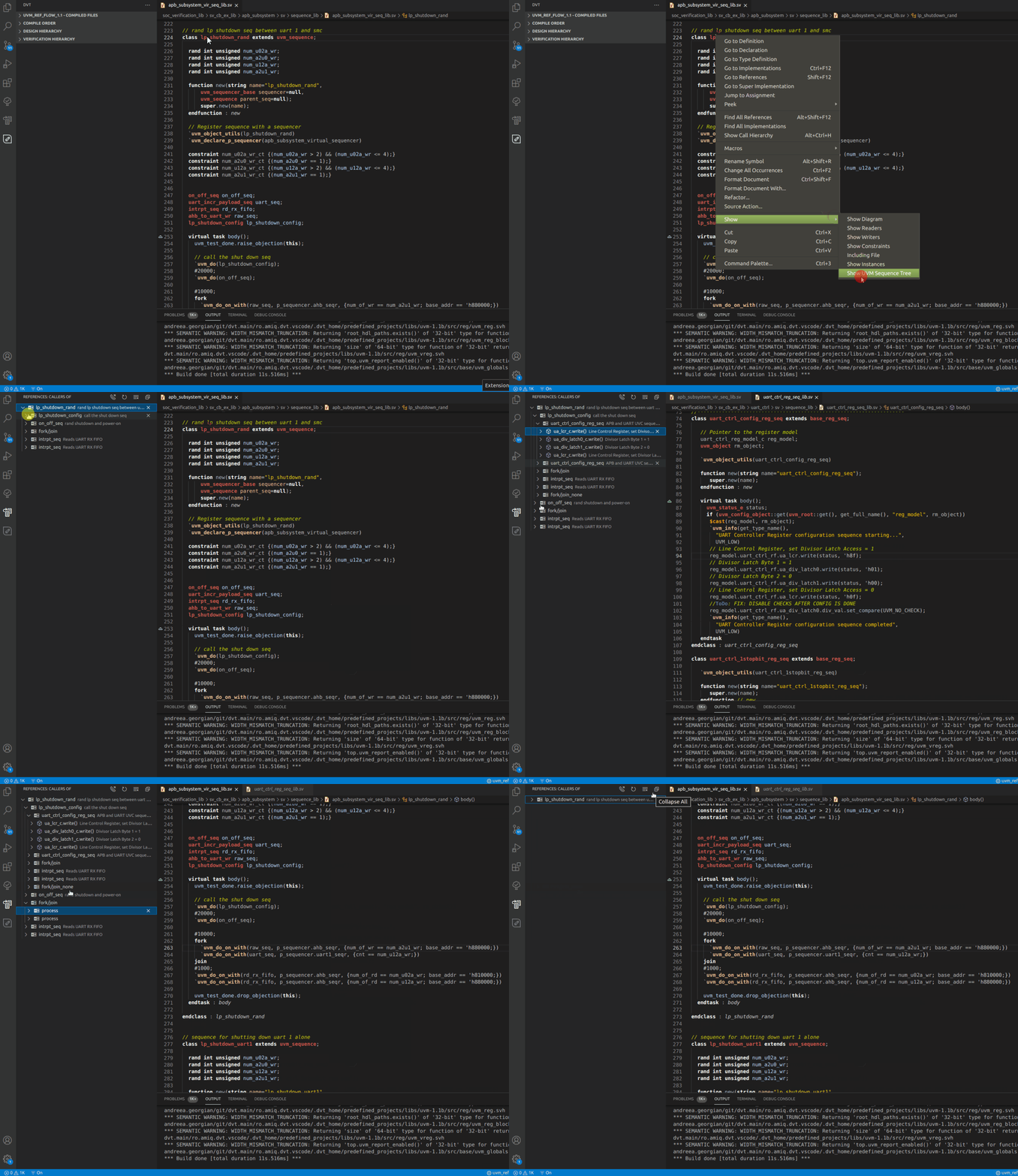
The command can also be triggered from the context menu .
The results are presented in the Call Hierarchy View.
The pre_body(), body() and post_body() methods of each sequence are analyzed, along with all TCMs called directly or indirectly from any of these methods.
Note
All relevant layers (extensions) of each TCM are analyzed according to their type (is also, is first, is only). A TCM layer is relevant if it belongs to a struct layer whose determinant is the same or included by the determinant of the sequence layer where the view was called.
Note
Only the modules loaded up to and including the module where the view is triggered are analyzed. For example, when triggered from a particular test, sequence calls in other tests are not analyzed. See also how DVT handles e Language Test Files and the Compile Order View.
Note
all of, first of and start actions are also shown.
Note
A sub-sequence may be called using a do action or started using the seq.start_sequence() function.